FIRST VERSION FOR REVIEW · Enquiries and phone links will be connected before launch.
Omega Hazmat Services
ASBESTOS ASSESSMENT & REMOVAL · NSW

Suspect asbestos?
Book your free
on-site assessment.

Renovating an older home or dealing with damaged materials? Get clear advice on what to do next.

✓ Clear advice on your next step✓ Assessment, removal & disposal✓ Homeowners & residential builders

Sydney · Central Coast · Newcastle · Wollongong

Before work begins,
know what you’re dealing with.

FREE ON-SITE ASSESSMENT & QUOTE

Book your free on-site
asbestos assessment.

Leave your details. Omega will call to discuss your property and arrange a time.

Assessment and quote: free. Laboratory testing: separate, with charges discussed first.

A CAREFUL APPROACH, AT EVERY STEP

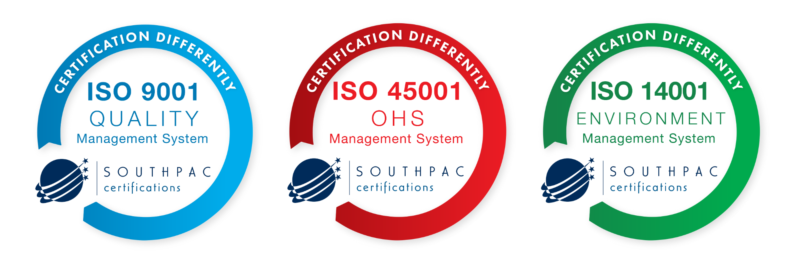
Quality. Safety. Environment.

Management-system certifications.
Separate from asbestos removal licensing.

Southpac badges: ISO 9001 Quality, ISO 45001 OHS and ISO 14001 Environment management systems
“Omega HazMat were fast, efficient, thorough and professional.”Jen Charleson · website testimonial excerpt
WHAT YOU GET FROM YOUR FREE ASSESSMENT

A clearer picture.
A practical next step.

Discuss your concerns

Show us the suspected material and explain any damage or renovation plans.

Understand your options

Discuss the appropriate next step and whether separate laboratory testing is needed.

Clarify the scope and quote

Understand the proposed work and costs before deciding how to proceed.

The assessment and quote are free. Laboratory testing is separate; charges are discussed first. An assessment alone cannot confirm asbestos without appropriate testing.

Book My Free On-Site Asbestos Assessment
SEE THE NEXT STEPS

From assessment
to a clear plan of action.

Start with your free assessment. If removal is needed, understand the work before it begins.
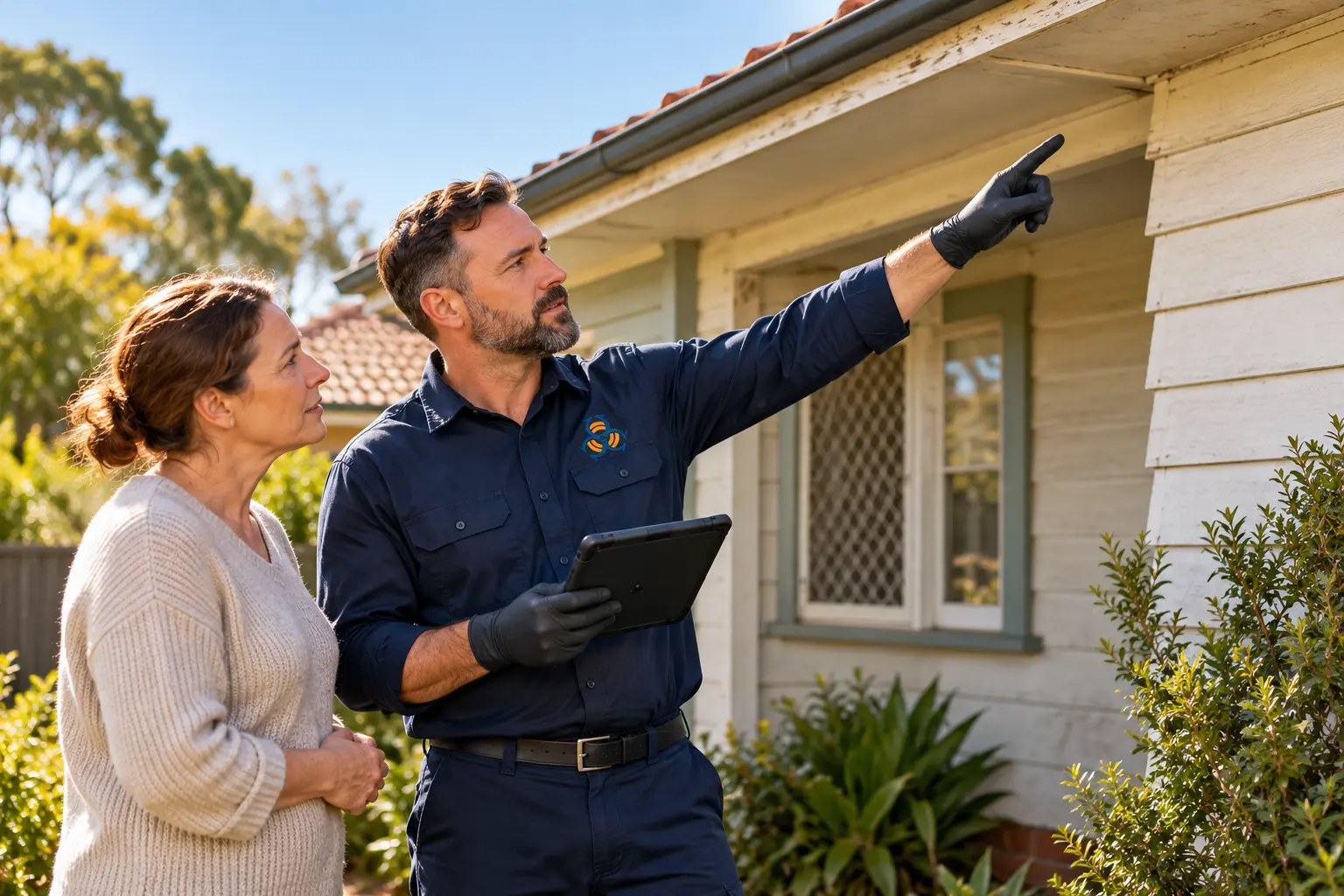
Illustration of an assessor discussing an older home with a homeowner, without disturbing materials
01 / ASSESS

Get clarity on site

Discuss your concerns, options and any testing needed.
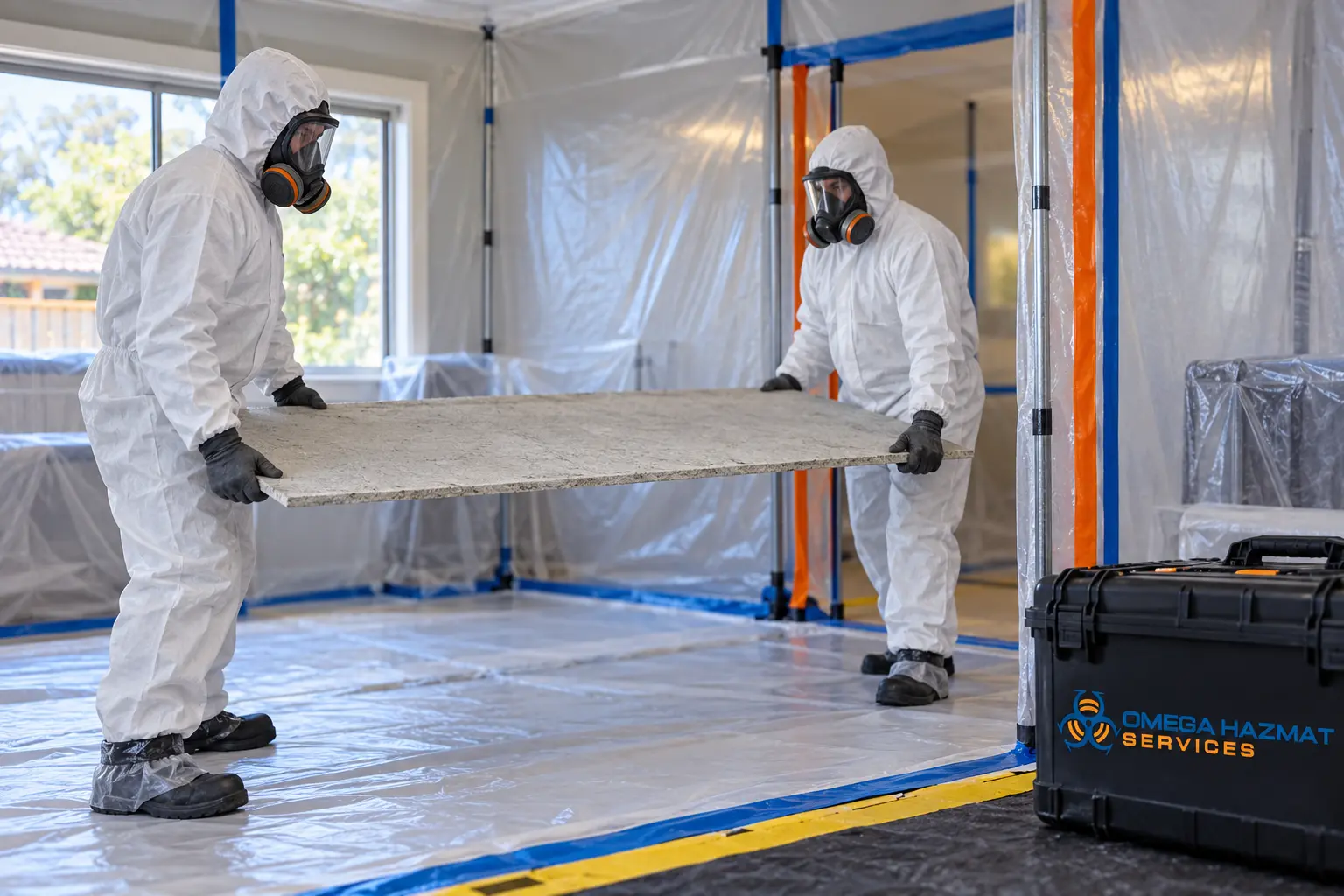
Illustration of workers in hooded protective coveralls and respirators handling an intact sheet in a controlled area
02 / PLAN & REMOVE

Controlled removal

Agree the scope and quote, with site controls appropriate to the job.
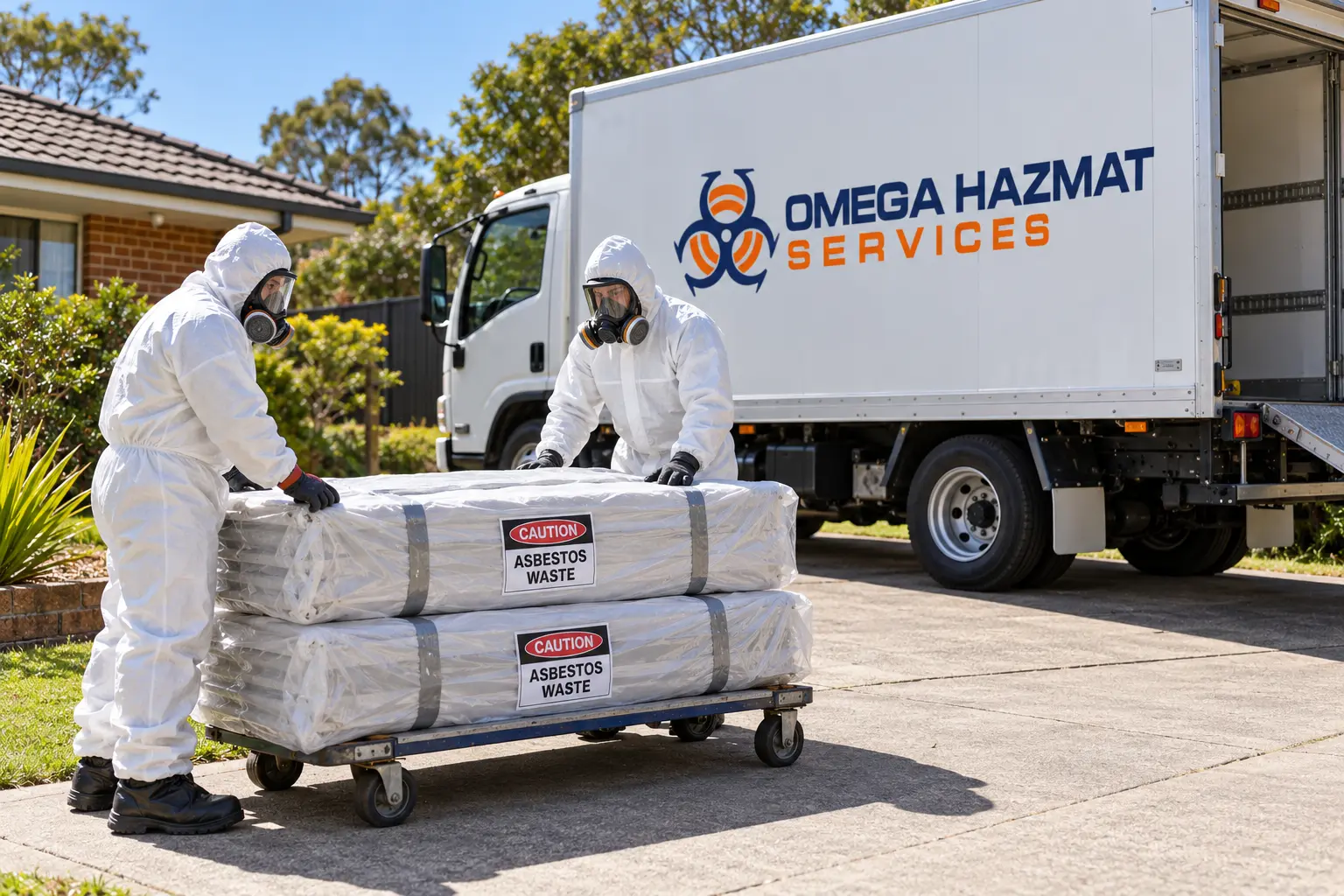
Illustration of an Omega-branded truck and workers beside sealed wrapped waste bundles
03 / DISPOSE & CLEAR

Finish the job properly

Lawful disposal and applicable independent clearance arrangements.

AI-generated illustrations of assessment, removal and waste handling. People, vehicle and site are illustrative—not photographs of Omega’s actual team, fleet or completed jobs.

Book Your Free On-Site Asbestos Assessment
WHAT CUSTOMERS SAY

Homeowners who chose Omega.

“They were very understanding and flexible in providing options.”Jen CharlesonWebsite testimonial excerpt
“the team was professional, knowledgeable, and communicative.”Nick BallWebsite testimonial excerpt
“They took great care in ensuring the safe removal of the asbestos”Jack M.Website testimonial excerpt
UNDERSTAND YOUR HOME

Asbestos isn’t always
where you expect it.

Built or renovated before 1990? Fibro, brick and weatherboard homes may contain asbestos—even behind newer finishes.

Check before the first cut—not after work starts.

Lifting flooring, removing bathroom tiles or opening walls may disturb hidden materials. Understanding suspected asbestos first helps your builder plan the work and account for any testing or removal needed.
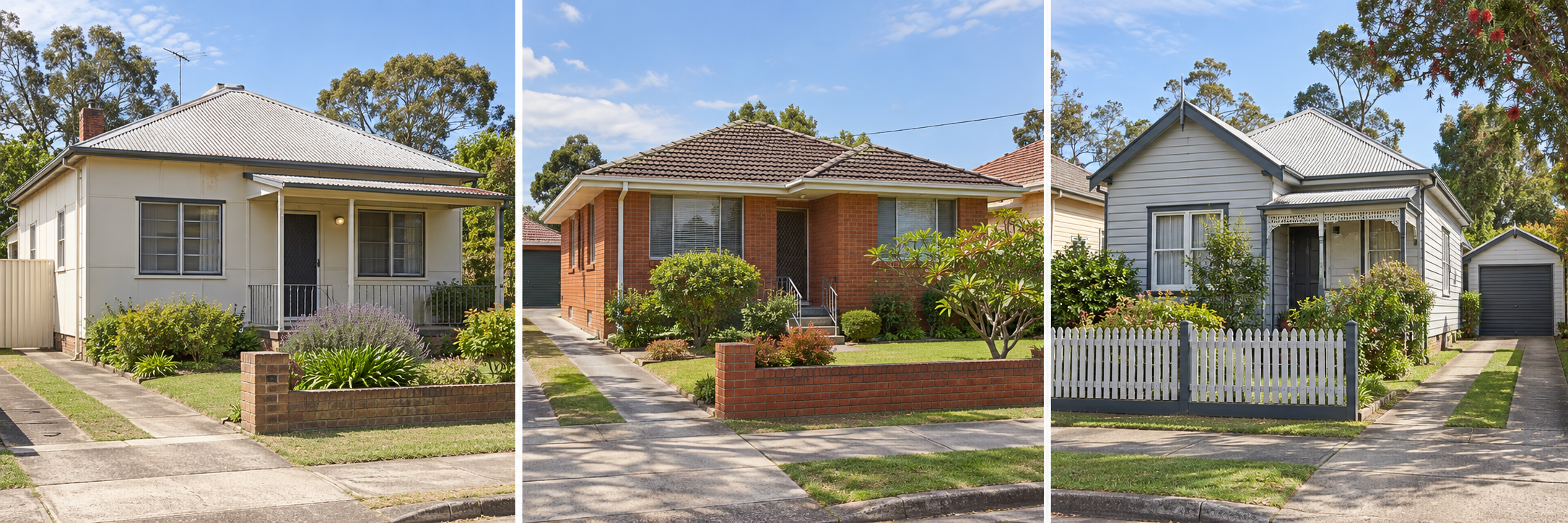
Does your home look familiar?

Illustrative views of an older fibro cottage, a brick-veneer suburban home and a weatherboard house
AI-generated examples of older Australian house styles. Not Omega jobs or confirmation of asbestos.
Where could asbestos be in these homes?
FIBRO COTTAGES

Often built from the 1940s–1980s

Some older cement-sheet walls, ceilings, eaves, roofing and fences may contain asbestos. Not all fibre-cement products contain asbestos.

BRICK-VENEER HOMES

Common in the 1960s–1980s

A brick exterior doesn’t rule it out. Suspected materials may include eaves, wet-area wall sheeting and some flooring or backing.

WEATHERBOARD HOMES

Older homes with later additions

Timber cladding doesn’t tell the whole story. Later bathrooms, laundries, extensions, garages or sheds may contain asbestos products.

House style is a starting point, not a diagnosis. Renovations can introduce materials of different ages. Professional assessment and, where needed, laboratory testing are required to confirm suspected asbestos.

Possible asbestos locations around a homeIllustrative cutaway house with numbered areas corresponding to the adjacent list. These are possible locations, not confirmation of asbestos. 1234567ILLUSTRATIVE GUIDE · NOT AN OMEGA JOB PHOTO
  1. Bathroom, kitchen & laundry wall sheeting
  2. Ceilings
  3. Eaves & soffits
  4. Roofing & external cladding
  5. Fencing
  6. Some vinyl flooring & backing materials
  7. Garages, sheds & outbuildings
You can’t confirm asbestos by looking.

Age, appearance and photographs alone cannot confirm it. Professional sampling and analysis by a NATA-accredited laboratory may be needed. Leave suspected materials undisturbed and seek advice.

Not sure what you’re looking at?

You don’t need the answers before you contact us.

Get My Free Assessment
KNOW WHEN TO ASK

A sensible next step.
Whatever brought you here.

01

Planning a renovation

Before work affects suspected materials, find out what is present and how it may change the scope of your renovation.

02

Damaged or exposed materials

A damaged fence, wall or ceiling needs careful advice. Stop work near suspected asbestos and keep people away.

03

Confirmed asbestos

Get a clear plan for appropriate management or professional removal, based on its condition and your planned work.

Suspect damaged asbestos?

Stop work, keep people and pets away, and avoid disturbing debris. Don’t sweep, vacuum or attempt to collect samples. Contact a licensed asbestos professional for advice.

Arrange an assessment →

Not all asbestos needs removal. Condition and planned work determine the right approach.

What happens if asbestos removal is needed?

From your first enquiry to the applicable clearance documentation, know what happens next.

Book Your Free On-Site Asbestos Assessment ↗
  1. Tell us what’s happening

    Share the property location, your concerns and any planned work.

  2. Arrange an on-site assessment

    Discuss the material and its condition. Where needed, Omega can arrange professional sampling and laboratory testing.

  3. Understand the scope and quote

    Review the proposed work, access, site preparation, timing and any separate testing costs.

  4. Controlled removal and disposal

    Omega plans site controls, removal and transport to a facility authorised to accept asbestos waste.

  5. Clearance and documentation

    Licensed removal work requires an independent clearance inspection before reoccupation. Class A work requires an independent licensed asbestos assessor; air monitoring and documentation depend on the work.

THE OMEGA APPROACH

Experienced asbestos specialists.
Clear guidance at every step.

↗

A plan for your property

Understand the work and preparation before removal begins, with communication for homeowners and builders.

✓

Careful site management

Appropriate controls, lawful disposal and applicable independent clearance arrangements.

◎

Help with the whole picture

Omega’s published services cover assessment and testing arrangements, asbestos removal and waste management.

MORE ANSWERS, IF YOU NEED THEM

Understand your options.

Tap a topic for practical guidance.

Why was asbestos used—and why was it banned?

Asbestos was valued for its strength, heat resistance and insulation. Those properties made it common in building products—from cement sheeting and roofing to some flooring and insulation.

WHY IT WAS USED

Useful properties.
Widespread applications.

Manufacturers added asbestos fibres to reinforce products and provide heat resistance. That is why suspected materials can appear in several parts of an older home, rather than just one room.

WHY WE STOPPED

The health risks
changed everything.

Breathing airborne asbestos fibres can cause serious diseases, including mesothelioma, lung cancer and asbestosis. Australia fully banned asbestos from 31 December 2003.

WHAT THAT MEANS TODAY

The ban didn’t remove
existing materials.

Asbestos remains in many older properties. Its presence alone does not always mean immediate removal is needed. Material condition and planned work determine the appropriate next step.

Class A vs Class B: materials, licences and risks

Class A and Class B describe asbestos removal licences. The materials themselves are usually described as friable or non-friable (bonded). The distinction helps determine the controls and licence required.

CLASS B LICENCE · BONDED REMOVAL

Non-friable, or bonded, asbestos

Asbestos fibres are held within a solid material, such as cement. Examples may include asbestos-cement wall sheets, eaves, roofing and fencing.

What’s the danger?

Intact material left undisturbed generally presents a lower risk of releasing fibres. Cutting, drilling, sanding, breaking or pressure cleaning can release harmful airborne fibres. Bonded does not mean harmless.

Who can remove it?

A Class B licence covers non-friable asbestos removal. A Class A licence also covers this work. In NSW, removal of more than 10 m² requires a licence; SafeWork recommends a licensed professional for any amount.

CLASS A LICENCE · FRIABLE & BONDED REMOVAL

Friable asbestos

Material that is powdery or can crumble to powder when dry is described as friable. Some older insulation and sprayed coatings may fall into this category.

What’s the danger?

Fibres can become airborne more readily, so specialist controls are needed. Badly deteriorated or damaged bonded material may also become friable and needs professional assessment.

Who can remove it?

Any amount of friable asbestos requires a Class A licensed removalist. A Class B licence does not authorise friable removal. Class A work requires air monitoring and independent clearance by a licensed asbestos assessor.

The health risk comes from breathing airborne asbestos fibres.

Both forms can cause serious disease, including mesothelioma, lung cancer and asbestosis. There is no known safe level of exposure. Don’t touch, break or test the material yourself to determine whether it is friable—leave it undisturbed and arrange professional advice.

Unsure what’s at your property? Start with an assessment.

Book Your Free On-Site Asbestos Assessment ↗
Before renovating: what should I check?

It isn’t only major demolition that can disturb asbestos. Drilling for a shelf, lifting old flooring or working behind bathroom tiles may affect suspected materials too.

Before anyone starts

  • Tell the team when the home was built or renovated, if known.
  • Share any existing asbestos test reports and the work you’re planning.
  • Explain your concerns to your builder and trades before work starts.
  • Leave suspected materials in place until you have professional advice.

Avoid disturbing it

  • Don’t cut, drill, sand or pressure-clean suspected asbestos.
  • Don’t lift flooring or remove wall sheets just to check underneath.
  • Don’t sweep or vacuum suspected asbestos debris.
  • Keep people and pets away from damaged material and seek advice.

Protective clothing alone is not a complete asbestos safety system. Site controls, specialist methods, decontamination and disposal also matter.

What should I ask an asbestos removalist?

A clear conversation now helps you understand the work, the costs and what happens afterwards. Ask Omega to walk you through these points for your property.

01

Does the licence cover this work?

Ask for current licence details and confirm the class is appropriate for the material and scope.

02

Is asbestos work covered by insurance?

Ask about cover relevant to asbestos removal, rather than relying on a general insurance statement.

03

What is included in the written quote?

Clarify preparation, access, testing, disposal, clearance and any exclusions or additional charges.

04

How will the site be controlled?

Discuss restricted access, occupant arrangements, timing and coordination with your builder.

05

Where will the waste go?

Confirm lawful transport and disposal at a facility authorised to receive asbestos, and ask about disposal records.

06

Who handles clearance?

Confirm applicable air monitoring, independent clearance and the documentation you will receive before reoccupation.

Start With Your Free On-Site Asbestos Assessment
YOUR QUESTIONS, ANSWERED

A little clarity
before you call.

Every property is different. We’ll explain the requirements for your job before work begins.

LET’S TAKE THE NEXT STEP

Get clarity.
Book your free assessment.

Tell us about your property. We’ll call to arrange your free on-site assessment and quote.

Sydney · Central Coast · Newcastle · Wollongong

Wider NSW enquiries welcome.

Book your free on-site asbestos assessment.

Laboratory testing is separate from the free on-site assessment.

Free AssessmentCall Omega